
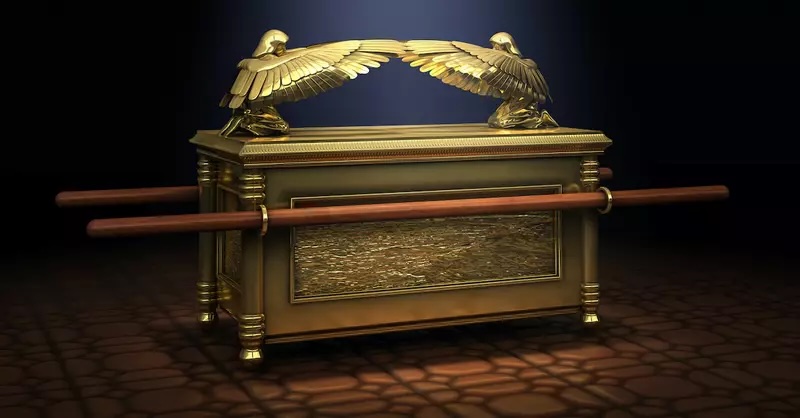
Exodus 25:10-22 details the design and instructions for building the Ark of the Covenant for the Israelites. The first few verses describe the ark itself – a wooden box about 45 inches long and 27 inches wide and tall. It has legs, rings, and carrying poles, and is overlaid with gold. Contained within the ark were the stone tablets with the words of the covenant written on them.
The cherubim are described in Ezekiel 1:4-14, and they are not the cute little baby angels that come to mind for most people. By their description, they would be quite terrifying to look at. There is nothing cute and cuddly about them. But placed on top of the Ark are two cherubim with wings outstretched and facing the ark. These cherubim overshadow the Ark, creating the space called the Mercy Seat.
The Mercy Seat is the location where God met Moses and communicated the Law for the people. But it had another significant purpose. Leviticus 16 describes the Day of Atonement, an annual time of sacrifice for Israel. Yes, there were many sacrifices made daily for sins. But the Day of Atonement was for all the people, for all the unknown sins they may have committed.
The first sacrifice was a bull to atone for the sins of the priest. The second was a goat for the sin of the people. These two sacrifices were unique from all of the others. “For each of these two sacrifices, the high priest would take some of the blood of the sacrifice through the curtain and into the most holy place. He would also take a censor of coals and some incense whose smoke would hide the mercy seat so that the priest would not die. God was dwelling above the mercy seat, so to see the mercy seat would be to see God. And that was fatal. The high priest would then sprinkle blood on the mercy seat as well as in front of it. And in that way, he made atonement for his own sin and the sin of the people.” (Ed Jarrett, Bible Study Tools.com)
So this was the function of the Mercy Seat before Jesus came and died on the cross. Next week we’ll talk about the Mercy Seat in the New Testament.